Cloud Hosting vs. Traditional Hosting: A Cost Analysis for Indian Small Businesses
Cloud Hosting vs. Traditional Hosting: A Cost Analysis for Indian Small Businesses
When a small Indian business begins operating online, selecting an appropriate hosting solution is the first significant strategic decision. Although the best cloud server for small businesses is now gaining ground quickly, it has not been a standard hosting for a long time.
It is not enough to go by word of mouth to choose cloud server hosting services over the traditional hosting option (either shared, VPS, or dedicated). For all small business owners, it is essential to understand how costs build up over time. The careful cost observations help make a well-informed decision about which hosting solution will best suit their needs.
Traditional hosting vs. Cloud hosting
Traditional hosting refers to hosting plans that offer fixed amounts of resource allocation and have a specific pool of servers tied to them. The most inexpensive and widely used traditional hosting plan is shared hosting. It consists of multiple websites sharing the same server resources. VPS hosting is a higher-tier option than shared and provides more resources at increased costs. Dedicated servers are the most powerful type of traditional hosting plan, with expensive plans.
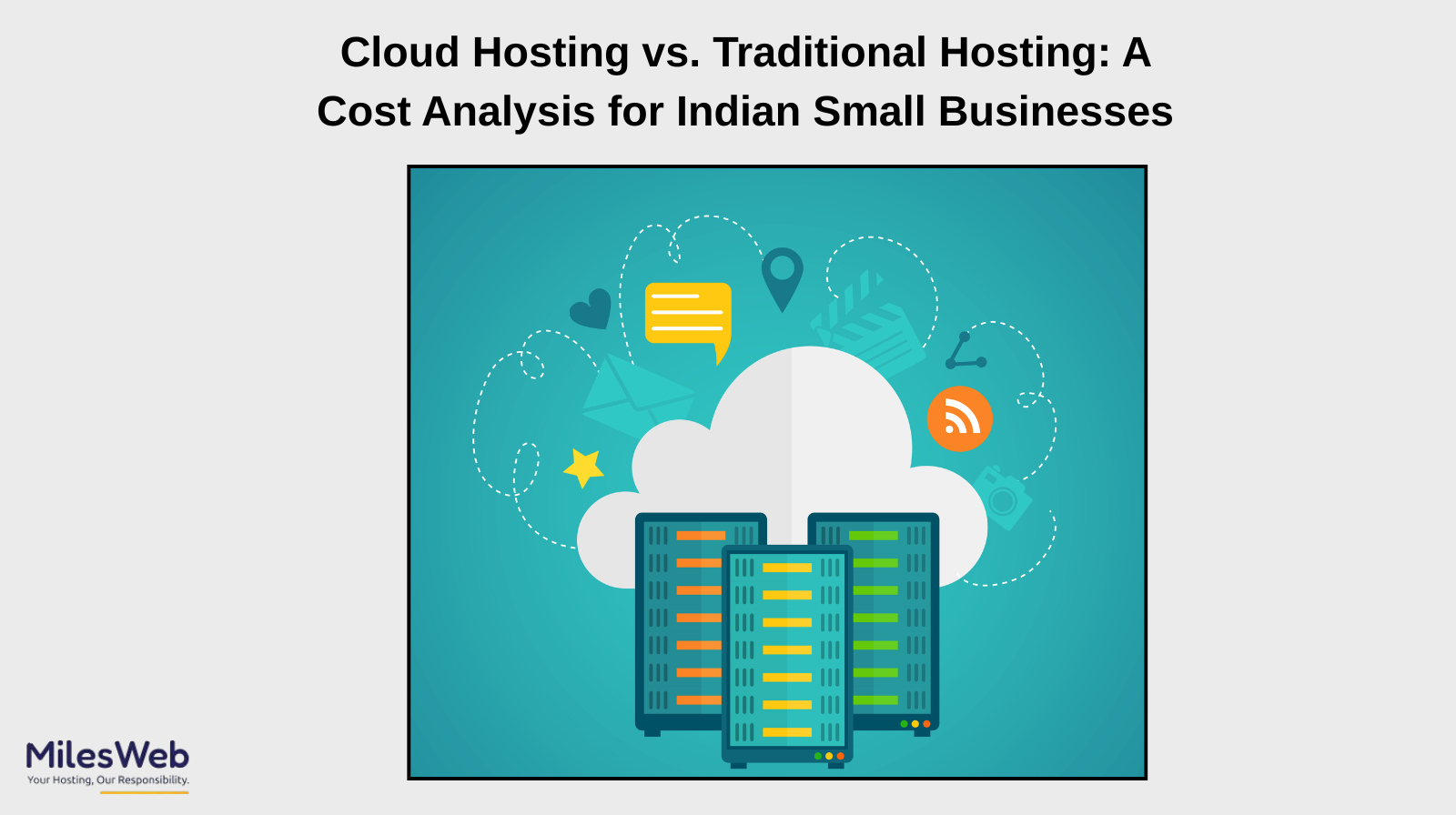
On the other hand, cloud hosting uses a network of interconnected servers to host a website. Instead of being tied down to one server, the website can use resources across multiple servers from a cloud resource pool. Therefore, cloud hosting can potentially offer the best pricing model, as it offers high levels of uptime and flexibility.
Upfront vs. Ongoing costs
The initial price for traditional shared web hosting is typically the lowest available; it can be found as low as ₹1,000 for one full year of service, including extras such as free SSL certificates, e-mail accounts, and basic technical support. Due to this low starting price, traditional shared web hosting is attractive for new startups and small blogs.
Cloud web hosting plans typically require higher upfront costs in comparison to traditional shared hosting. Many of the higher-priced cloud hosting plans include managed service. You get the option of a pay-as-you-go cloud, which means usage-based control.
With providers like MilesWeb, you get affordable fixed monthly plans, which help to estimate overall cloud hosting service expenses.
Takeaway: The low initial cost associated with traditional shared hosting should be compared to the performance and reliability required over the long term before selecting one or the other.
Pay-per-use
A pay-per-use service is one of the main benefits of cloud hosting providers. Using this service means that a small business is using only the resources needed. In addition, when a small business experiences an increase in traffic from its website, the cloud hosting provider can immediately provide additional resources without interruption to the website user's experience.
Flexible billing also means there may be inconsistent pricing based on the usage of resources. This can make cloud hosting unaffordable for small Indian businesses with little technical skill. Business owners who can't set up their cloud environment, such as configuring usage alerts or resource limits, will incur additional charges for unexpected spikes in web traffic due to poor code.
Cost considerations with scalability
One of the major advantages of using cloud hosting is scalability. With cloud infrastructure, you can increase instances as needed at any time, making it ideal for Indian small businesses that have seasonal or holiday traffic. Instead of purchasing a dedicated server or manual upgrade, you can scale your resources in real time with cloud hosting.
● Cost Comparison: Businesses that have fluctuations in traffic often can get better performance with cloud hosting compared to other traditional fixed-price plans.
Reliability and downtime costs
Downtime causes more than just inconvenience; it leads to lost revenue, abandoned carts, and damaged reputations. Even minimal downtime, especially at peak times in a store's cycle, can have a serious impact on business. Traditional hosting services become degraded in performance and cannot be relied on for consistent availability.
Cloud-based hosting solutions offer higher uptime guarantees because of the redundancy built into them. Thus, even if there’s a server failure, the other servers will pick up the workload. As a result, faster loading times and fewer interruptions create a better experience for users. Ultimately, it increases the potential for higher conversion rates and ROI.
In other words, although traditional hosting may be cheaper, the indirect cost of downtime is higher for e-commerce retailers, booking systems, and services that operate in time-sensitive environments.
Cost for security and maintenance
When it comes to protecting your customers' information, credit card details, and login credentials, there are no compromises. You must provide an adequate level of protection to your customers. In most cases, the cost of keeping a traditional host secure is often greater than the cost of managed cloud hosting. Therefore, businesses choose to utilize managed cloud hosting plans to protect their website.
From a financial standpoint, one of the main benefits of using cloud hosting is that the provider takes care of the majority of the maintenance. Thus, Indian small business owners save the cost of hiring a security expert in addition to their existing traditional hosting plan.
Insights Recap
When comparing cloud and traditional hosting in India, the choice isn't just about the price tag. However, they must be evaluated on their perceived value and your actual operational environment. For brochure websites or pages with very few visitors, traditional hosting is a cost-effective choice.
However, for businesses that require higher levels of performance, scalability, uptime, and reliability, the use of cloud hosting becomes a distinct benefit.
Your website is now the main way people decide to buy from you. Spending your budget wisely on the right online experience is the difference between your business growing and failing.
Recent Blogs